Understanding NPS Certification Process
Rehabilitation under the Federal Historic Preservation Tax Incentives Program follows a three-step review carried out by the National Park Service in partnership with the State Historic Preservation Office (SHPO). Each step—Part 1, Part 2, and Part 3—plays a distinct role in documenting the property’s significance, describing proposed work, and certifying that the completed rehabilitation meets the Secretary of the Interior’s Standards. This framework shaped every decision made at La Primavera.
Interested in templates and full documentation?
Part 1 — Identifying Historic Significance
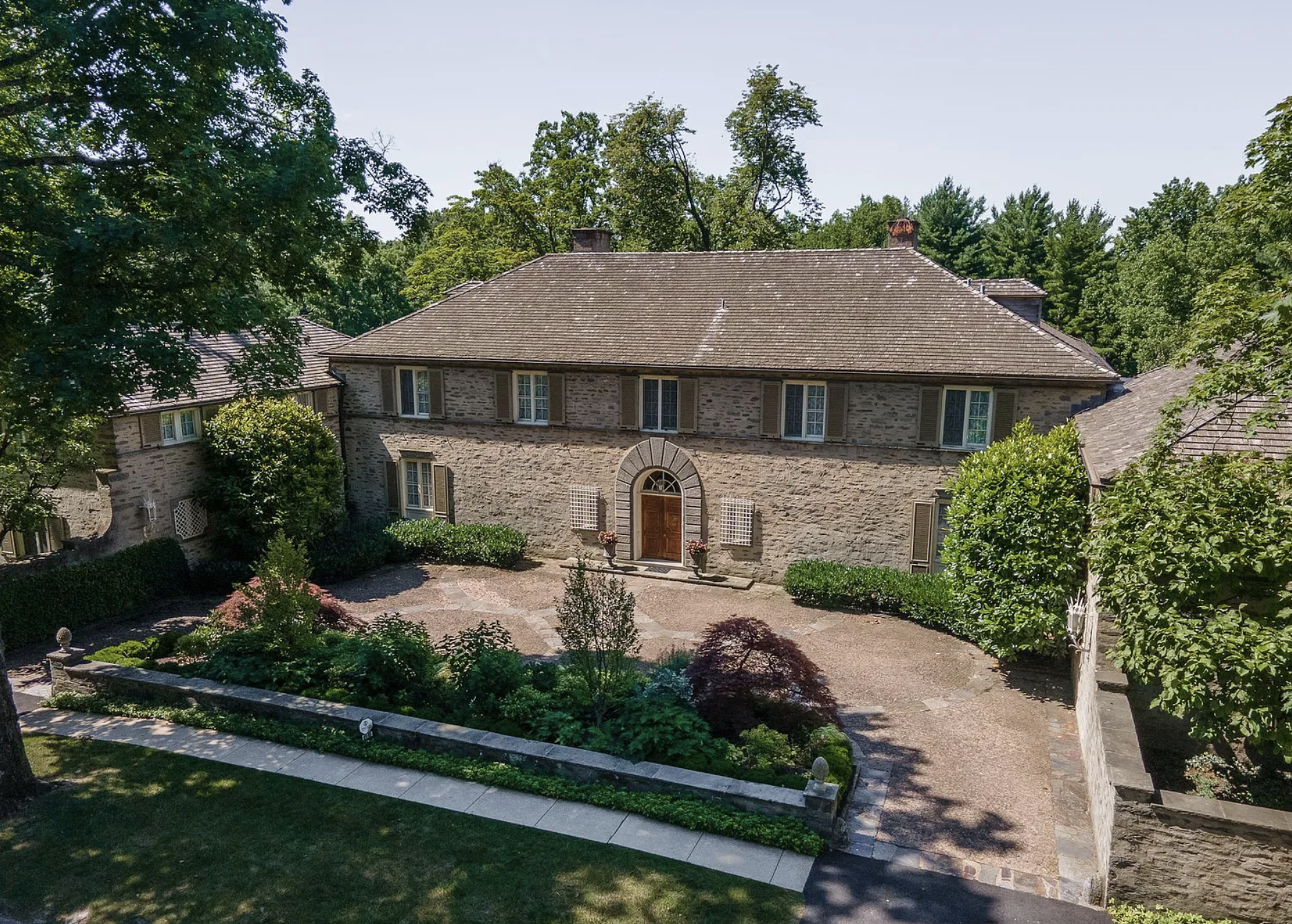
Part 1 establishes whether the property contributes to the historic district or is individually eligible for the National Register. For La Primavera, this step confirmed the home’s architectural significance as a 1925 Italian Revival residence constructed with Wissahickon schist masonry and distinctive period craftsmanship. Recognition at this stage anchors all subsequent rehabilitation decisions.
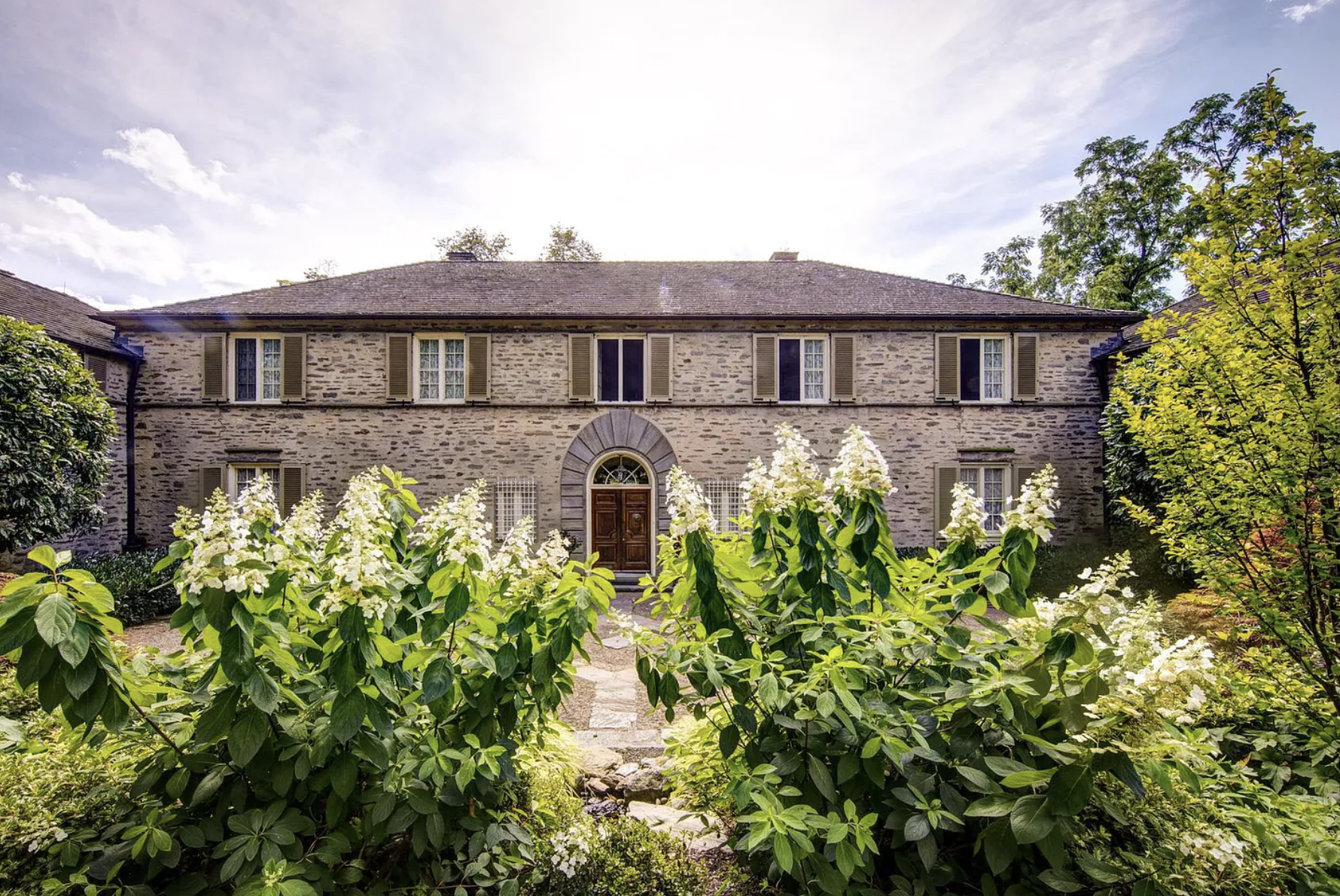
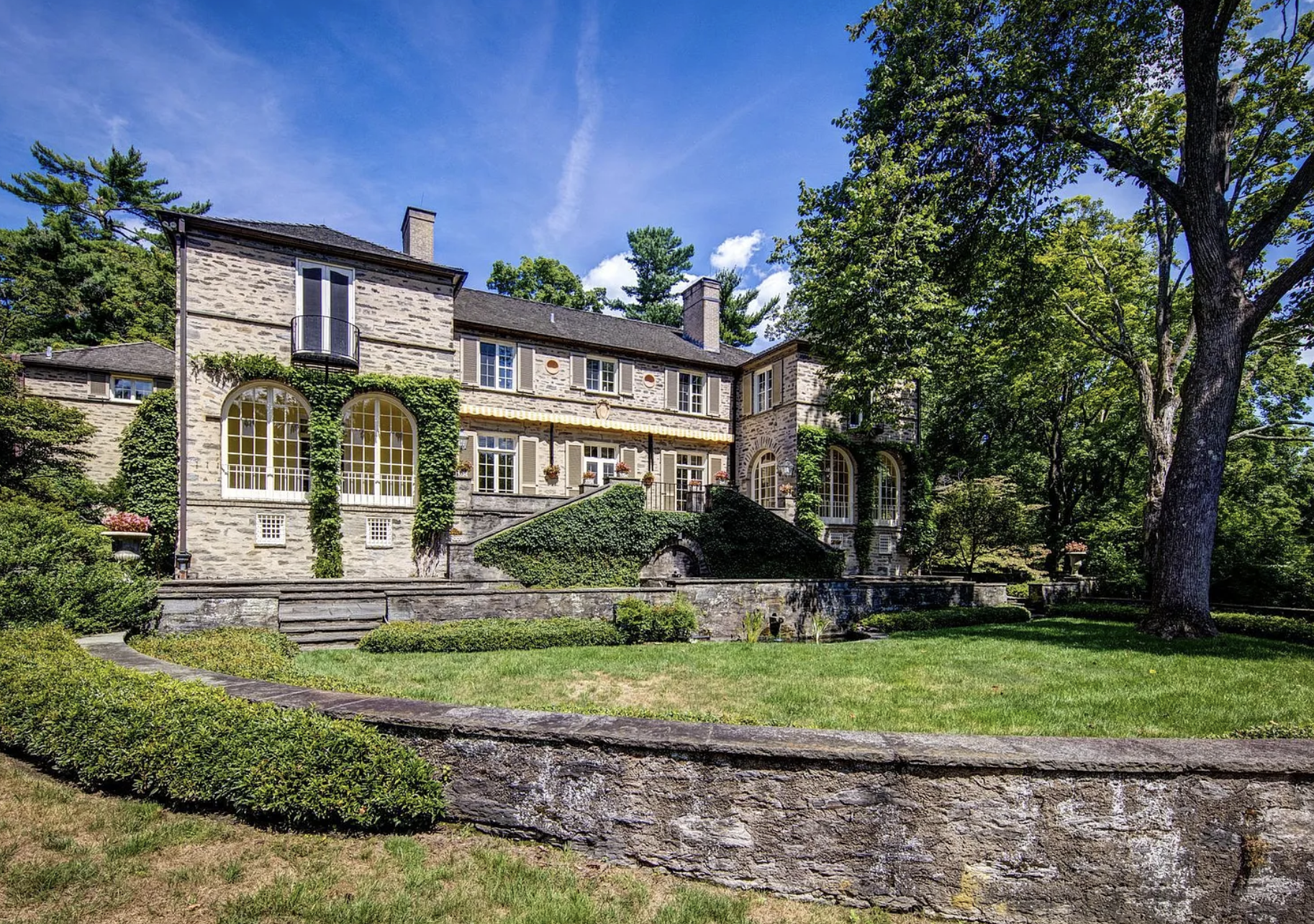
The home’s symmetrical stone façade, balanced window openings, and central arched entry define its Italian Revival character and form the basis of its historic significance.
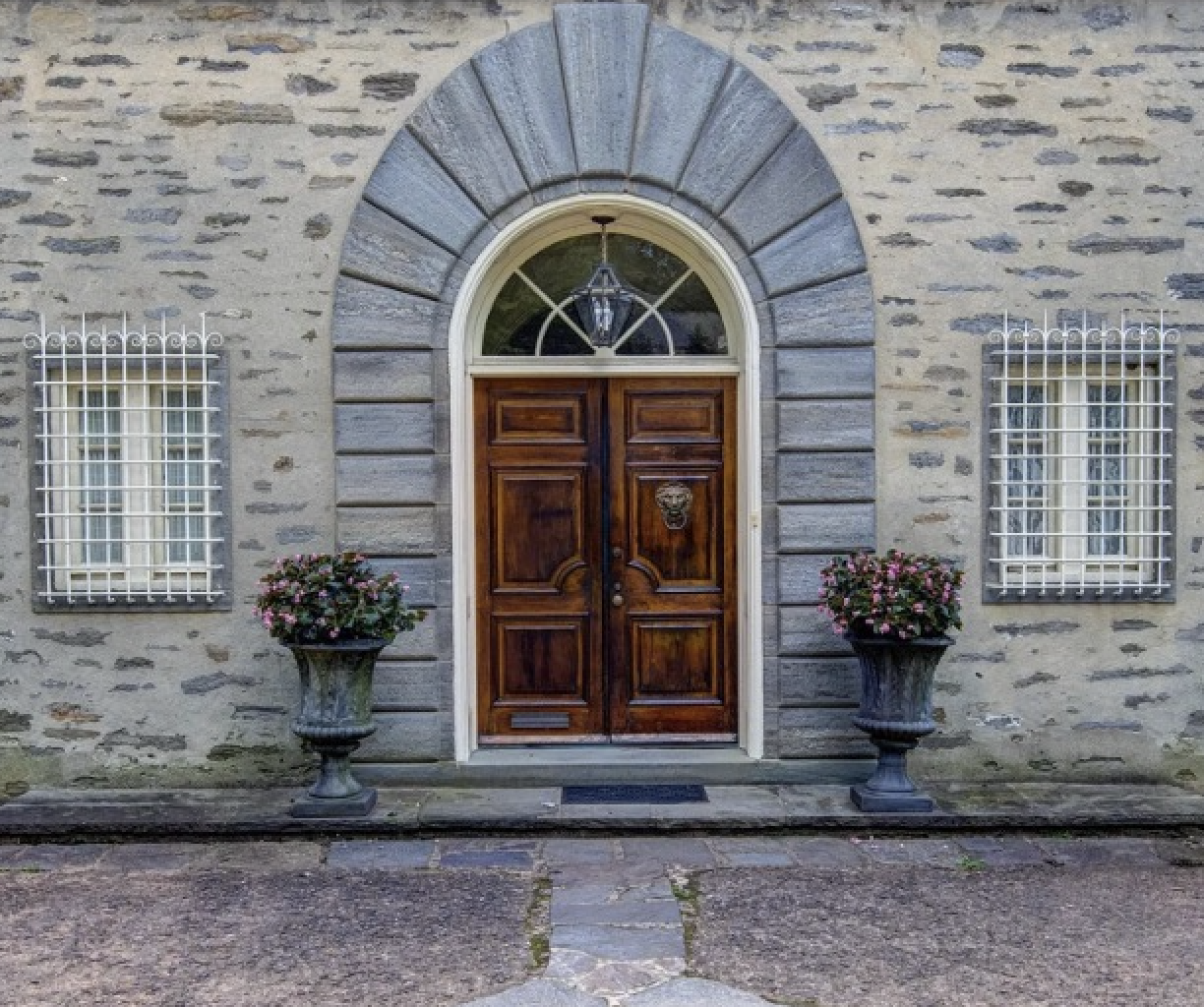
A limestone keystone arch frames the original paneled wooden entry door, a focal point of the home’s composition and a key character-defining feature identified in NPS review.
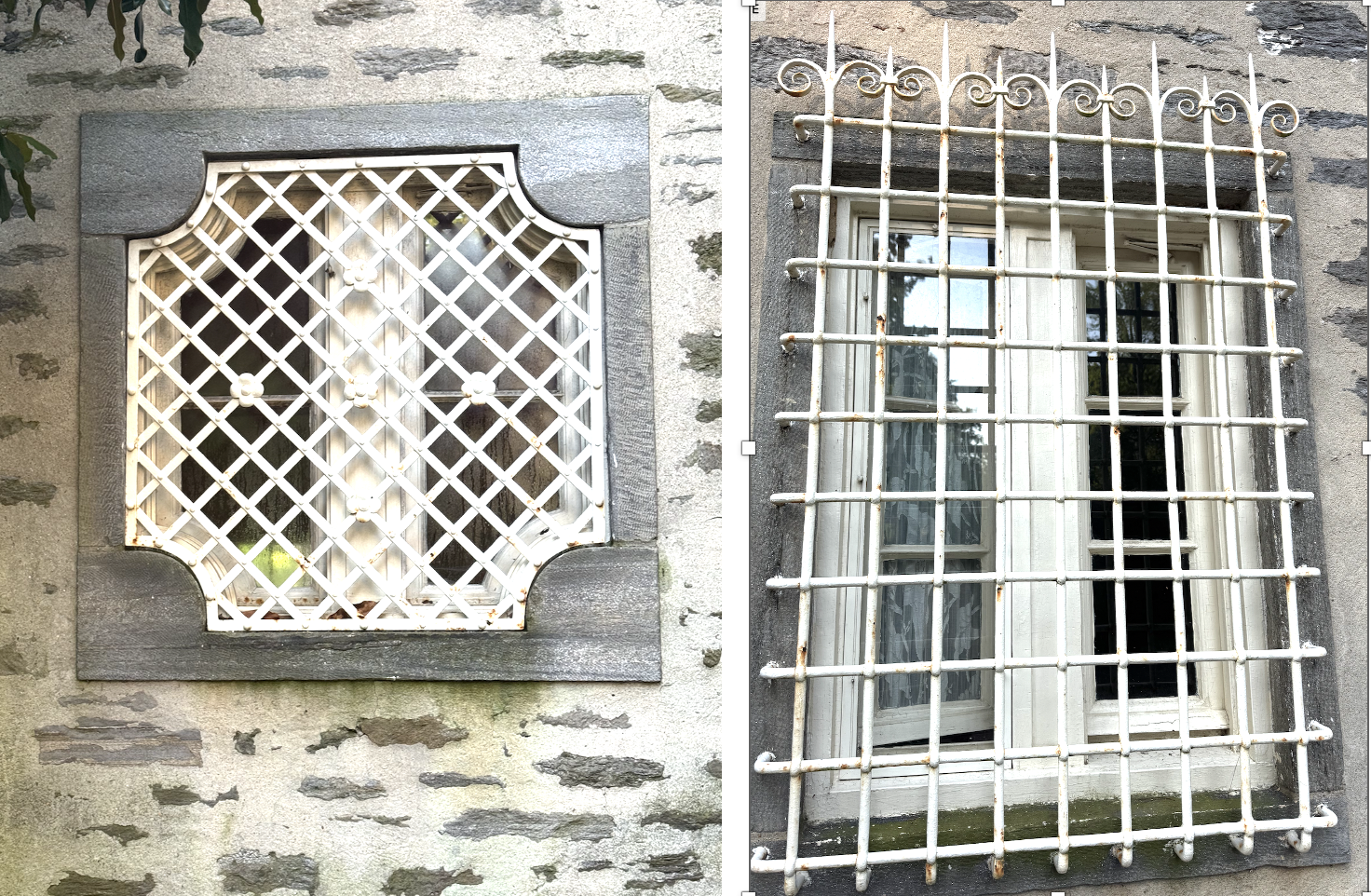
Original window assemblies and decorative metal grilles contribute rhythm, depth, and craftsmanship to the façade. Their preservation is essential to maintaining historic integrity.
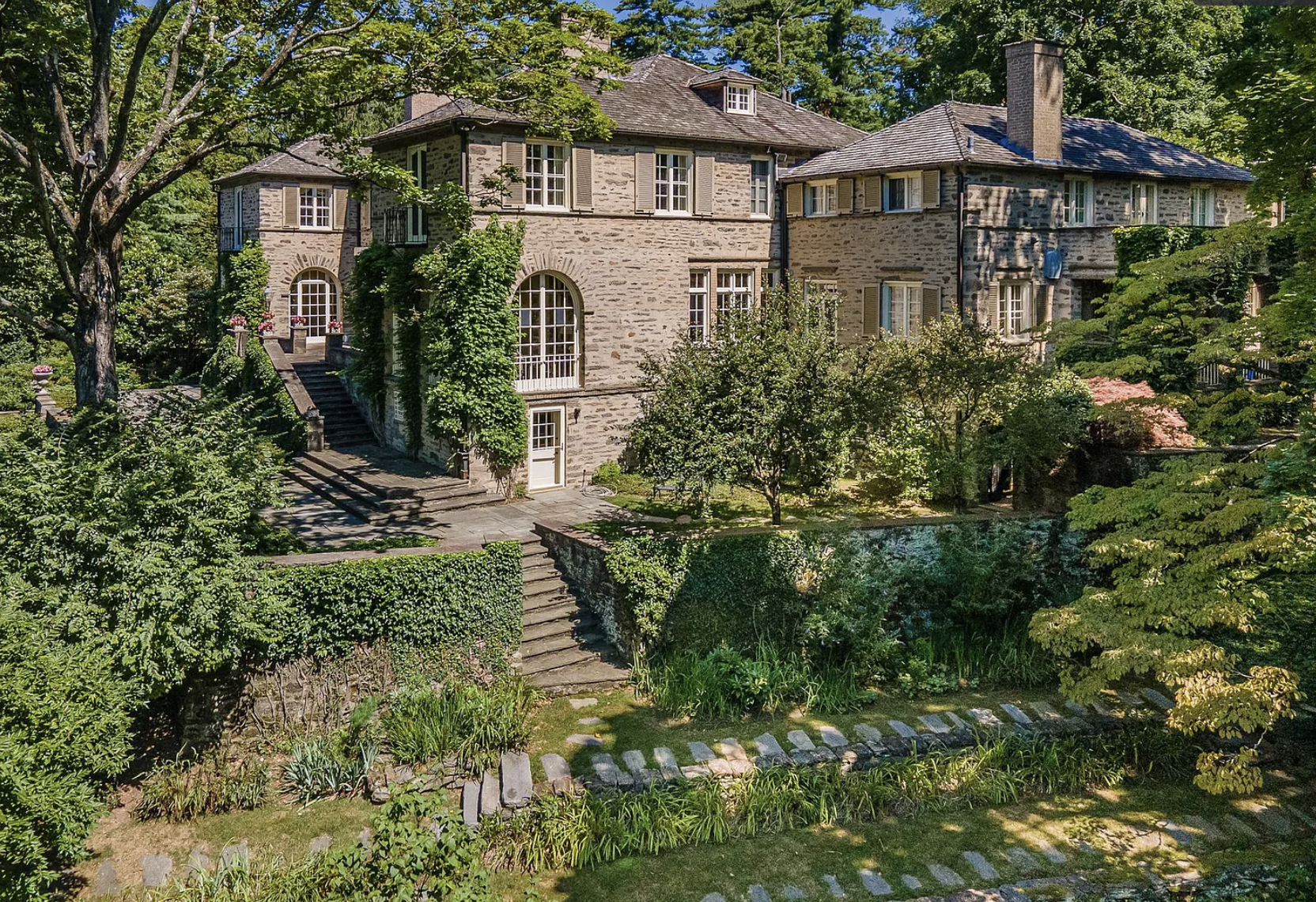
Locally quarried Wissahickon schist masonry, with its distinctive coloration and coursing, gives the home its material authenticity and architectural texture.
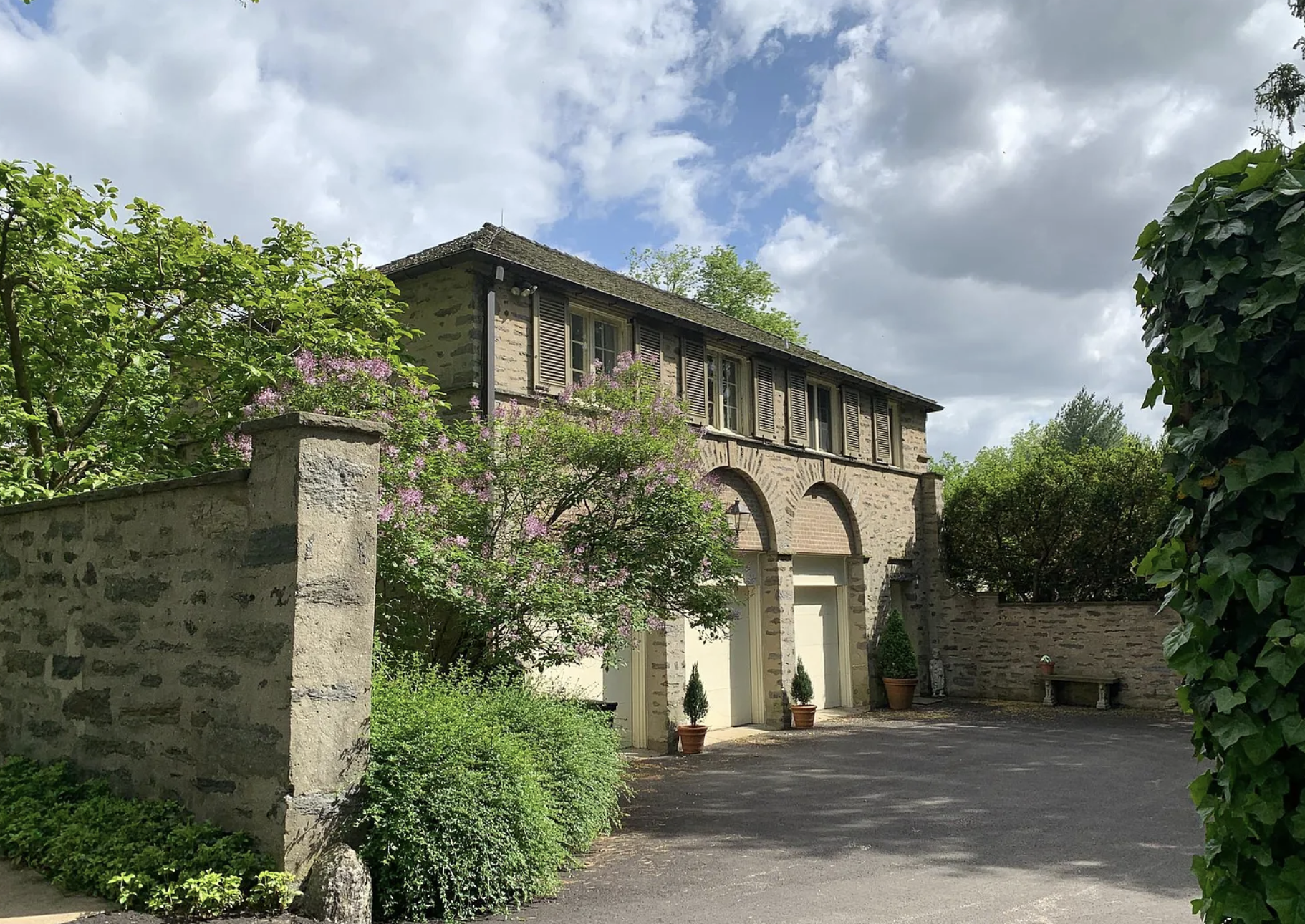
The rear elevation’s stone terraces, site walls, and landscaped garden illustrate the estate’s cohesive design and reinforce its historic character.
Wooden shutters, stone trim, and window surrounds reflect the craftsmanship and proportion characteristic of the home’s 1925 Italian Revival design.
Part 2 — Describing Proposed Rehabilitation
Part 2 details the specific work proposed—including repairs, material replacement, new additions, and energy or accessibility upgrades—so NPS can evaluate compatibility with the Secretary of the Interior’s Standards. For La Primavera, this included roof replacement, window restoration, HVAC modernization, and site improvements such as the sensitive redesign of the kitchen door and porch. This review ensures that necessary modernization can proceed without compromising historic character.
Historic wood shingle roofing exhibited deterioration, weathering, and material failure. Understanding the extent of degradation was essential for planning a sensitive roof reconstruction aligned with NPS guidelines.
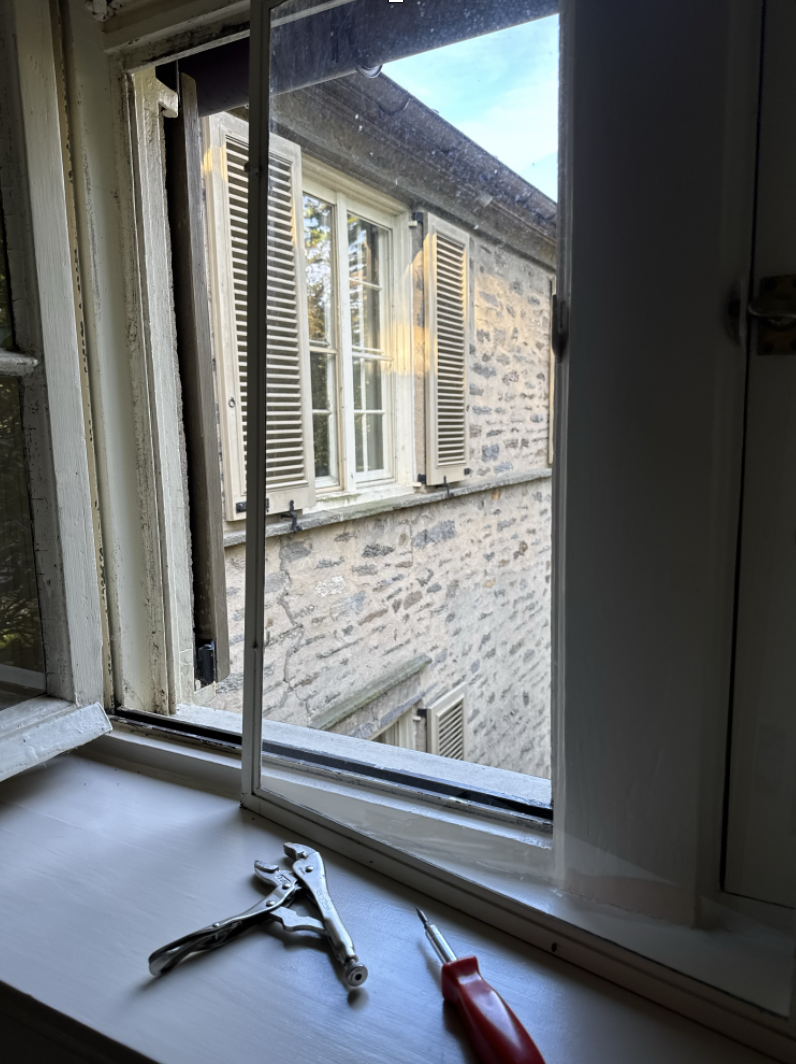
Mid-century additions such as storm windows introduced visual and physical impacts to the façade. Identifying non-original elements helps determine what can be removed or adapted in compliance with preservation standards.
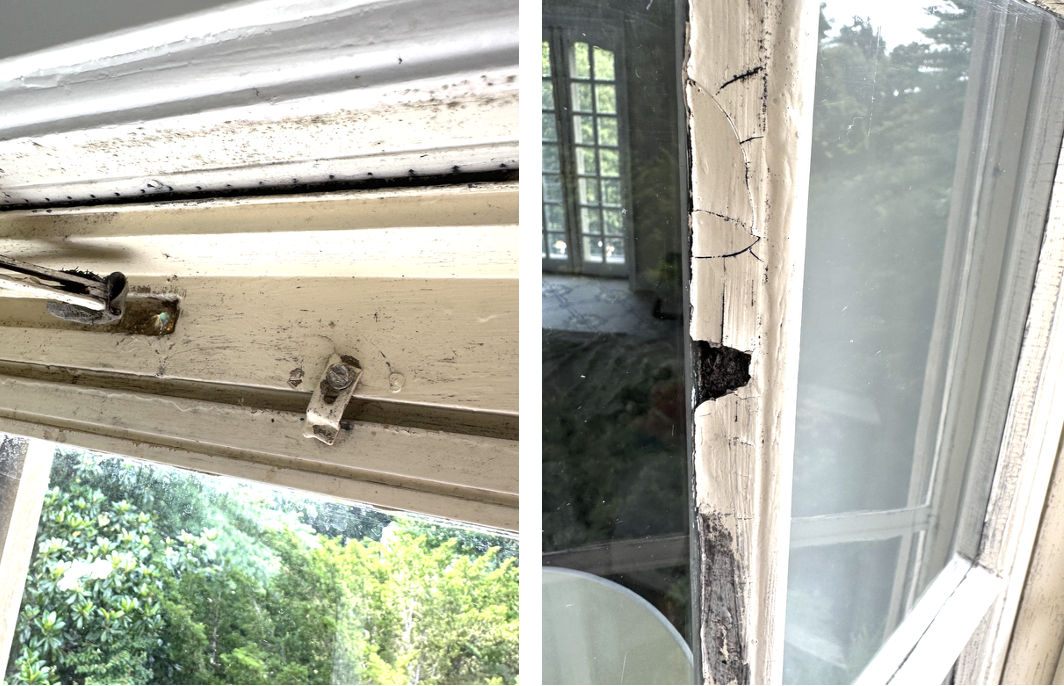
Original window assemblies showed glazing failure, deteriorated sash, and aging hardware. Assessing condition is a key step in determining appropriate rehabilitation measures under the Secretary of the Interior’s Standards.
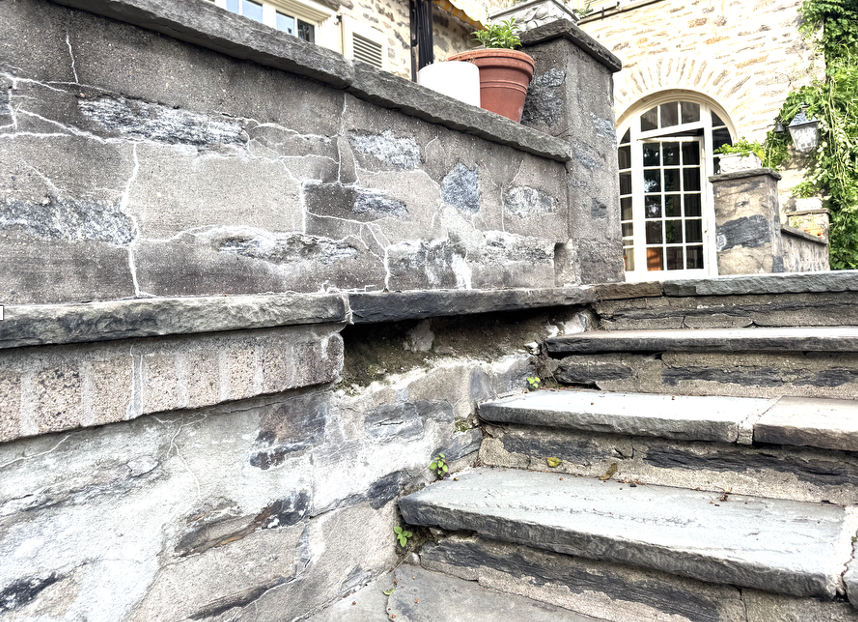
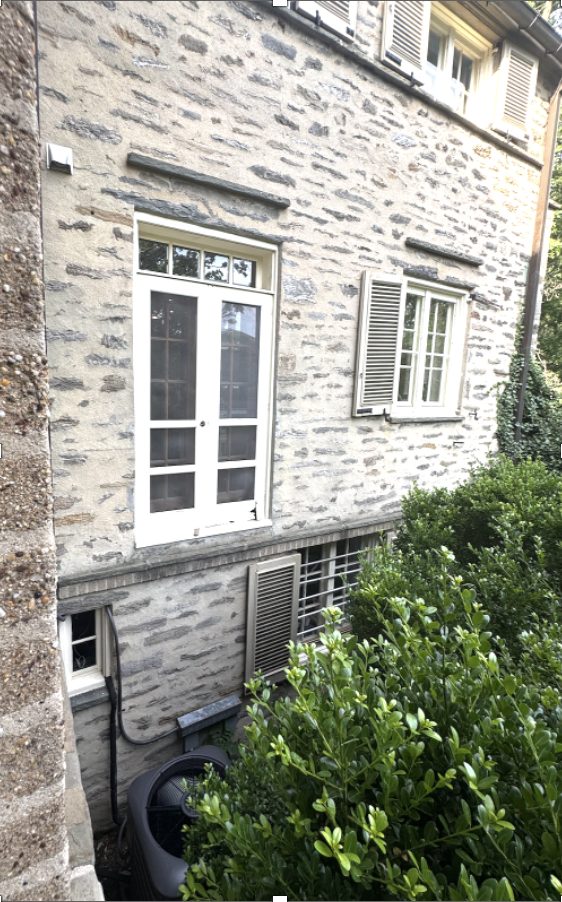
Wissahickon schist masonry displayed natural weathering, vegetation impact, and mortar deterioration. Material evaluation supports long-term performance while retaining historic character.
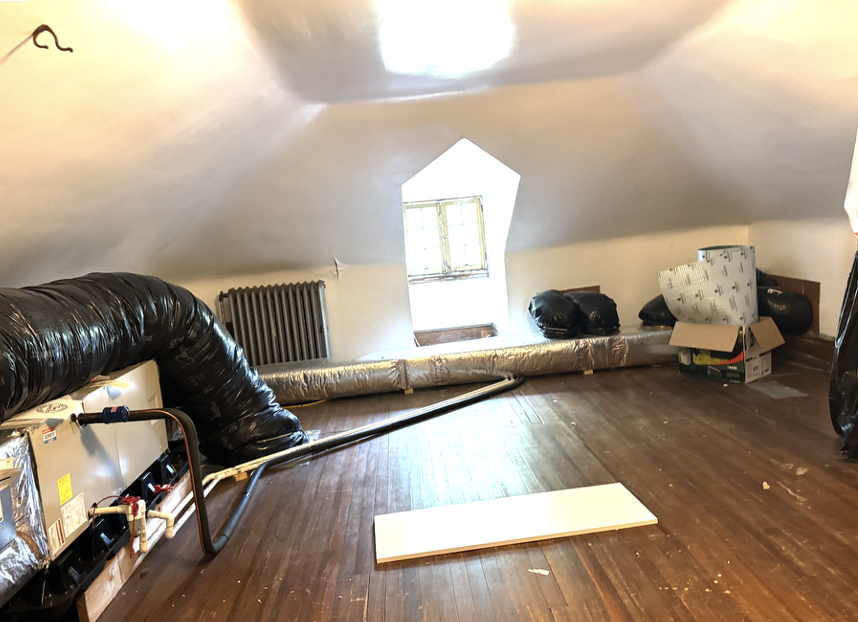
Introducing new HVAC pathways and roof-integrated technologies demands minimizing visual and physical impact on character-defining features. Coordination ensures compatibility with preservation goals.
A kitchen door opens directly to the exterior without a porch or landing, indicating a non-historic alteration that disrupts functional and architectural relationships and requires sensitive rehabilitation planning.
Part 3 — Request for Certification of Completed Work
Part 3 is submitted after construction is complete. It documents the rehabilitation as executed—through photographs, receipts, and descriptions—to confirm that work aligned with the approved Part 2 scope. This final step certifies eligibility for the rehabilitation tax credit. At La Primavera, this includes final photographs of the restored masonry, reconstructed windows, solar-integrated roofing, and interior systems upgrades completed in accordance with the approved plans.
NPS Framework for Certified Rehabilitation
-
Part 1 — Establishing Historic Significance
Part 1 confirms the property’s historic character and identifies the features that must be preserved. For La Primavera, this included its 1925 Italian Revival design, masonry, windows, and crafted architectural details.
-
Part 2 — Proposing Sensitive Rehabilitation
Part 2 describes the planned work and shows how each intervention meets preservation standards. Proposed roof replacement, window strategies, material repairs, and system upgrades are evaluated for compatibility with historic fabric.
-
Part 3 — Certifying the Rehabilitation Work
Part 3 verifies that the completed work matches the approved plans. Using photos and documentation, NPS confirms the project meets the Standards—granting certification and eligibility for the 20% historic tax credit.
Go Deeper: Explore the Full Net-Zero Demonstrator Library
What you’ve seen above is the high-level story of how a 1925 home is being preserved and prepared for a net-zero future. But the real value—the process, the decisions, the documentation—lives inside the members-only library.
Membership includes:
Annotated versions of our NPS applications with commentary on what mattered and why
Construction sequencing and phasing guides for deep-energy retrofits
Detailed product selections (windows, HVAC, solar, geothermal, TES) and why they passed NPS review
Energy modeling insights and tax-credit stacking examples
A curated archive of photos, drawings, and site documentation
Practical templates and checklists you can adapt for your own project
If you are planning a renovation—historic, energy-efficient, or both—this paywalled toolkit is designed to save you months of work, uncertainty, and guesswork.
Join to access everything.